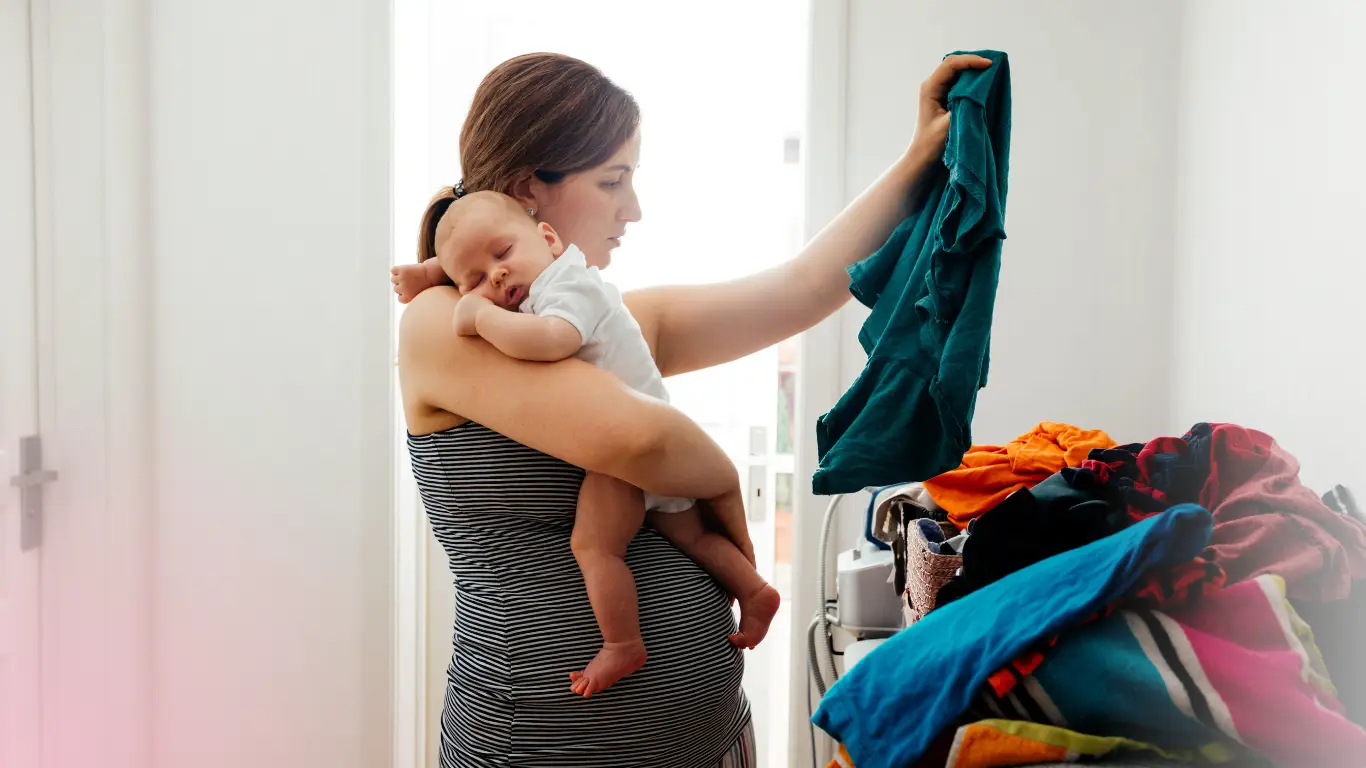

If you’re reading this while holding a sleeping newborn (or waiting for one to fall asleep), I see you!
Newborn sleep can be one of the most confusing topics for new parents, and for good reason. No one really prepares you for how unpredictable sleep can be in those early weeks.
One day your baby sleeps peacefully between feeds, and the next night they’re wide awake at 2 a.m., staring at you like it’s a party. You might be wondering if something is wrong, if you’re doing something incorrectly, or if you should already be working toward a schedule.
Let me reassure you right away: most newborn sleep struggles are completely normal.
In this post, we’ll walk through newborn sleep in the first 8 weeks, what that looks like, what’s developmentally normal, and gentle ways to support better rest — for your baby and for you.
If you’re still getting your footing in those early weeks, you may find it helpful to read my newborn care tips for the first 30 days, which covers daily routines and expectations for brand-new parents.
Affiliate Disclosure
Some links on this site may be affiliate links. This means I may earn a small commission at no extra cost to you if you choose to make a purchase. I only share products I genuinely believe may be helpful for new parents.
What Newborn Sleep Looks Like in the First 8 Weeks
One of the biggest misconceptions about newborns is that they sleep “all the time.” While it’s true that newborns sleep a lot, that sleep is very broken up.
Typical newborn sleep patterns
Most newborns:
- Sleep 14–17 hours in a 24-hour period
- Sleep in short stretches, often 1–3 hours at a time
- Wake frequently to eat, especially in the early weeks
This is because newborns have tiny stomachs and fast metabolisms. Waking to feed is not only normal — it’s essential. Your pediatrician may even emphasize to wake your baby every 2-3 hours in the middle of the night to feed if they don’t wake on their own to prevent your baby from dropping below their birth weight in the first 2 weeks.
If your baby isn’t giving you long stretches of sleep yet, it doesn’t mean you’re doing anything wrong. It simply means your baby is doing exactly what newborns are designed to do.
Why Newborn Sleep Feels So Hard
Newborn sleep can feel especially challenging for a few reasons:
- Day–night confusion
Babies aren’t born with a circadian rhythm. Many newborns are more alert at night and sleepier during the day. - Short sleep cycles
Newborn sleep cycles are much shorter than adult ones, making frequent waking common. - Overstimulation
New experiences, visitors, sounds, and lights can all affect newborn sleep. - Growth and development
Growth spurts often come with increased waking and feeding.
Knowing these reasons won’t magically make nights easier — but it can help you feel less worried and more grounded in what’s normal. Creating a calming sleep environment doesn’t require a lot of gear, and my guide to newborn essentials for the first 30 days focuses on what’s truly helpful early on.
Is There a Newborn Sleep Schedule?
This is one of the most common questions new parents ask.
The short answer?
Newborns don’t follow schedules — they follow needs.
In the first 6–8 weeks, it’s best to think in terms of rhythms, not schedules.
A realistic newborn sleep rhythm might look like:
- Eat
- Brief awake time
- Sleep
- Repeat (day and night)
Trying to force a strict schedule too early can create unnecessary stress. Instead, focus on:
- Watching wake windows (usually 45–60 minutes)
- Responding to sleepy cues
- Allowing flexibility
Gentle Newborn Sleep Tips That Actually Help
While you can’t control how long your newborn sleeps, there are ways to gently support better sleep.
1. Focus on full feeds during the day
Encouraging full feeds during daylight hours can sometimes help newborns settle more at night.
This might look like:
- Keeping baby awake enough to finish feeding
- Offering feeds every 2–3 hours during the day
2. Help with day–night awareness
You can gently support circadian rhythm development by:
- Letting daylight in during the day
- Keeping nights dim and quiet
- Using calm voices and minimal stimulation at night
I personally used this dimmable LED night light for my kitchen and bedroom where my daughter was sleeping in a bassinet the first 6 months of her life. The dimmable feature, plus it turns off on its own with natural day light.
Another sleep method we tried from the start was swaddling our daughter only at night and I feel it helped her distinguish day and night awareness a little bit quicker. I absolutely loved this SwaddleMe set because these particular swaddles were super easy to use in the middle of the night, which was important to my husband and I when trying to get optimal rest.
3. Watch for sleepy cues
Newborns often become overtired quickly. Look for:
- Red eyelids or eyebrows
- Slower movements
- Brief eye contact followed by turning away
Putting baby down at the first signs of sleepiness can make a big difference.
Safe Sleep Basics (Always First)
Before anything else, sleep safety matters.
The American Academy of Pediatrics recommends:
- Placing baby on their back
- Using a firm, flat sleep surface
- Keeping the sleep space free of loose blankets, pillows, and toys
If you’re ever unsure about safe sleep practices, check with your pediatrician — they’re your best source for personalized guidance.
What About Contact Naps and Being Held?
If your newborn only sleeps while being held, you’re not alone.
Contact naps are:
- Extremely common
- Comforting for newborns
- Not a “bad habit” at this stage
Newborns are adjusting to life outside the womb, and your presence offers safety and regulation. Over time, independent sleep becomes more possible.
For now, do what works while prioritizing safety and your own rest.
How Long Should a Newborn Sleep at Night?
In the first weeks, “night sleep” often looks like a series of short stretches rather than one long block.
Typical nighttime patterns:
- Waking every 2–3 hours to feed
- Occasionally giving a 3–4 hour stretch
- Frequent changes from week to week
Longer stretches usually emerge gradually — not suddenly — and often around 8–12 weeks, though every baby is different. Many parents find that having easy high-protein snacks on hand helps during long nights and frequent feedings.
Supporting Your Rest Too
Caring for a newborn is exhausting. Supporting your own rest is just as important as supporting your baby’s sleep.
Gentle reminders:
- Sleep when you can, not when you “should”
- Accept help when it’s offered
- Lower expectations wherever possible
Since sleep deprivation affects energy and recovery, supporting yourself with simple postpartum nutrition can make a noticeable difference during this stage.
When to Seek Extra Support
While frequent waking is normal, trust your instincts. Reach out to your pediatrician if:
- Your baby seems excessively sleepy or difficult to wake for feeds
- Feeding issues are affecting sleep
- You’re concerned about growth or behavior
If you are struggling emotionally, know that help is available. Sleep deprivation can intensify postpartum emotions, and you don’t have to carry that alone.
If you’re feeling unsure or overwhelmed during the early weeks, this post on finding confidence as a first-time parent may also be helpful.
Frequently Asked Questions About Newborn Sleep
How many hours should a newborn sleep in a day?
Most newborns sleep between 14 and 17 hours in a 24-hour period, but that sleep happens in short stretches. Waking frequently to eat is normal and expected in the first weeks.
Is it normal for my newborn to wake every 2 hours at night?
Yes. Newborns have small stomachs and need to eat often. Waking every 2–3 hours, especially in the first 6–8 weeks, is very common and not a sign of a problem.
Should I put my newborn on a sleep schedule?
Newborns are not developmentally ready for schedules. Instead of a strict sleep schedule, it’s more helpful to follow sleepy cues and gentle rhythms during the first two months.
Why does my newborn sleep more during the day than at night?
Many newborns experience day–night confusion because their circadian rhythm is not yet developed. This usually improves gradually as they are exposed to daylight during the day and calmer, darker environments at night.
Is it okay if my newborn only sleeps when being held?
Yes. Contact naps are very common in the newborn stage and do not create bad habits. As your baby grows, independent sleep often becomes easier with time and development.
When do newborns start sleeping longer stretches at night?
Some babies begin offering longer stretches around 8–12 weeks, but every baby is different. Sleep development is gradual, not linear, and frequent waking early on is normal.
Final Thoughts on Newborn Sleep
Newborn sleep isn’t something you need to “fix.”
It’s something you move through — one night, one nap, one feed at a time.
Your baby isn’t trying to give you a hard time- They’re having a hard time adjusting to the world outside of the womb.
With time, support, and gentle rhythms, sleep will evolve. Until then, you’re doing enough — even on the nights that feel endless 🤍
Medical Disclaimer
This content is for informational purposes only and is not intended to replace professional medical advice. Always consult your pediatrician or healthcare provider with questions or concerns about your baby’s health, sleep, or development.